TOP 10 Most Frequently Asked Questions About Laser Hair Removal
Laser hair removal is one of the most popular methods for long-term hair reduction. Despite its growing popularity, people planning their first treatment usually have similar questions: does laser hair removal hurt, how many sessions are needed, can the hair grow back, and how should the skin be prepared before the first appointment?
This is completely natural because the results depend not only on the type of device used, but also on hair colour and thickness, skin phototype, treatment regularity, and proper care before and after each session.
Below, we answer the most common questions about laser hair removal that Babalab specialists hear during consultations at salons in Warsaw and Krakow.
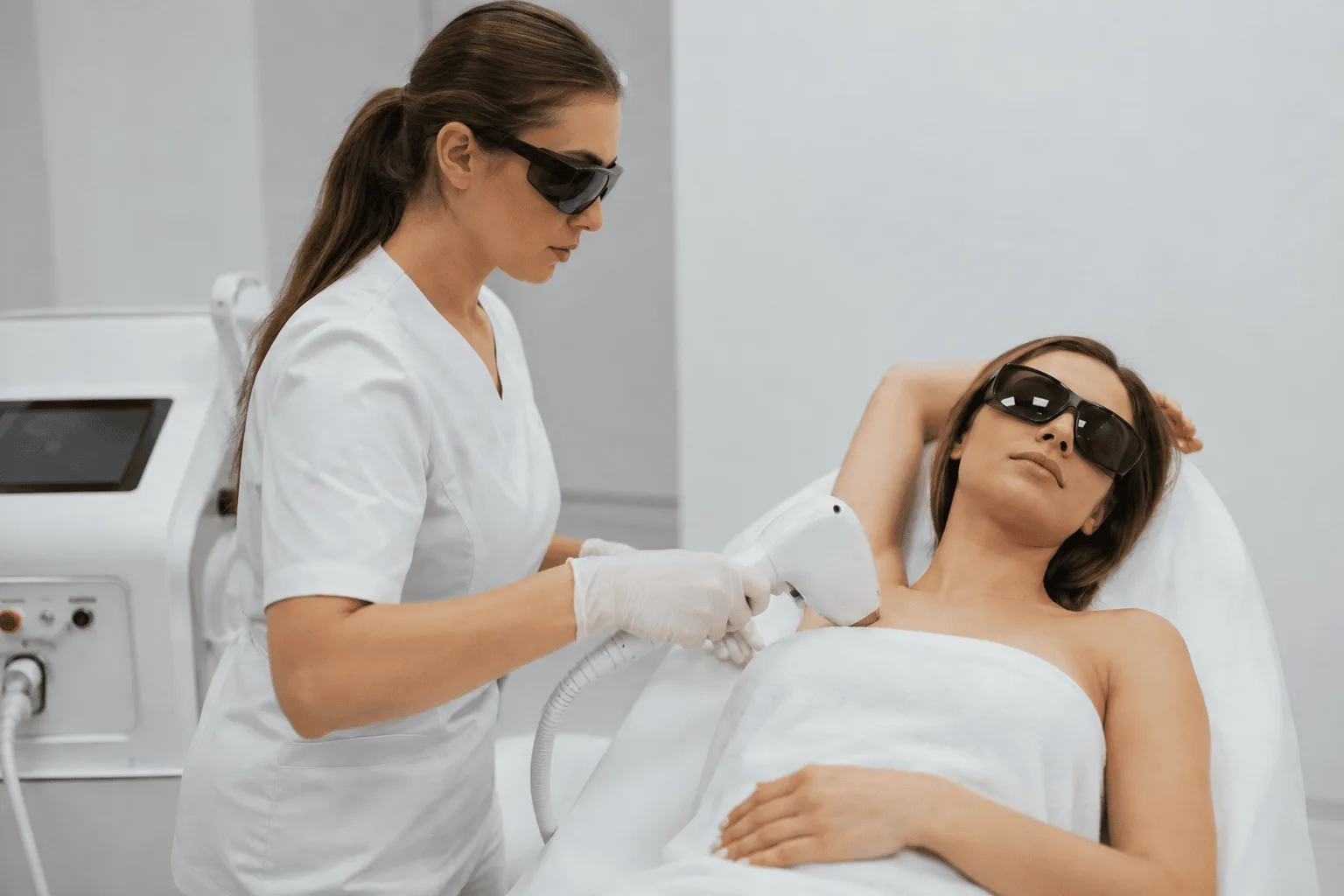
The most important answer in brief
Laser hair removal provides long-term hair reduction, but it is not a one-time procedure. In most cases, a course of several sessions is required at appropriate intervals. The treatment should be preceded by a consultation, and the device settings should be adjusted to the individual person’s skin and hair characteristics.
1. Does laser hair removal hurt?
Laser hair removal may cause a brief sensation of heat, tingling, or a mild stinging feeling, but most people tolerate the procedure well. The level of discomfort depends on the treatment area, hair thickness, individual pain threshold, and the device being used.
More sensitive areas often include:
- bikini,
- underarms,
- upper lip,
- chin,
- ankles.
Less discomfort is usually reported during treatment of the legs, arms, abdomen, or back.
Modern lasers use cooling systems that protect the epidermis and improve comfort during the procedure. Examples include Moveo technology used in Motus devices, as well as cooling systems integrated into diode lasers.
However, discomfort should not be ignored. If you experience strong burning or pain during treatment, you should inform the specialist immediately. The device settings should be effective while remaining safe for the skin.
2. How many laser hair removal sessions are needed?
A course of around 6–8 treatments is most commonly recommended. Some people may need more sessions, especially if hair growth is hormonally influenced, the hair is fine, or a particular area responds less effectively to laser energy.
Laser works primarily on hairs that are in the active growth phase, known as anagen. Not all hairs are in this phase at the same time. For this reason, a single session cannot affect all the hair in a given area.
The number of required visits depends on:
- hair colour and thickness,
- skin phototype,
- treatment area,
- hormonal balance,
- selected technology,
- regularity of treatments,
- individual response of the hair follicles.
The first noticeable results may appear after a few sessions, but judging the entire course after only one or two treatments is usually too early.
3. Will the hair grow back after laser hair removal?
Laser hair removal provides long-term hair reduction, but it should not be presented as a guarantee that every single hair will be removed forever. After a full course, most hairs should stop actively growing, while the remaining hairs may become finer, lighter, and less noticeable.
After several months or years, individual new hairs may appear. This is most often associated with:
- natural hormonal changes,
- pregnancy,
- menopause,
- thyroid disorders,
- polycystic ovary syndrome,
- certain medications.
In such cases, a maintenance session can be performed. This does not mean that the previous course was ineffective. Over time, the body may activate hair follicles that were previously inactive.
4. Can you shave between treatments?
Yes. You can shave between laser hair removal sessions.
However, you should not remove hair from the root using:
- wax,
- sugaring paste,
- tweezers,
- a mechanical epilator.
The laser needs pigment in the hair and in the part of the hair structure located inside the follicle. If the hair is pulled out from the root, the laser will not have the proper target during the next treatment.
Shaving does not remove the hair from the follicle, so it does not interfere with the treatment course. In most cases, the area should be shaved around 24 hours before the appointment unless the specialist advises otherwise.
5. Can you sunbathe before and after laser hair removal?
Fresh tanning can increase the risk of irritation, burns, and pigmentation changes. For this reason, intense sun exposure should be avoided before treatment, and the specialist should be informed about any recent tanning.
After laser hair removal, the skin may be more sensitive to ultraviolet radiation. It is recommended to:
- avoid intense sun exposure,
- avoid tanning beds,
- use a high-SPF sunscreen,
- cover the treated area when possible,
- follow the individual aftercare instructions provided by the salon.
The interval between tanning and treatment depends on the laser type, skin phototype, degree of tanning, and body area. It is better not to assume that the skin is ready for treatment without professional assessment.
6. Does laser hair removal work on light hair?
The effectiveness of laser hair removal depends largely on the amount of melanin present in the hair. Laser responds best to darker hair that clearly contrasts with the skin.
With very light, grey, white, or red hair, the effect may be limited because these hairs contain little pigment or contain a type of pigment that absorbs laser energy less effectively.
However, the visible hair colour is not the only factor. A specialist also evaluates:
- hair colour near the root,
- hair thickness,
- skin phototype,
- treatment area,
- response during a test patch.
If laser is not a suitable method, electrolysis may be an alternative. It works regardless of hair colour because a fine probe is inserted into the follicle and the hair root is destroyed using an electrical impulse.
7. Is laser hair removal safe?
Laser hair removal can be safe when performed by a trained specialist using appropriate equipment and properly selected settings for the client’s skin.
Safety depends mainly on:
- consultation before treatment,
- ruling out contraindications,
- correct assessment of skin phototype,
- the experience of the practitioner,
- the quality and technical condition of the device,
- following aftercare recommendations.
Possible temporary reactions include redness, mild swelling around the hair follicles, and a sensation of warmth. These usually resolve within a short time.
If the procedure is performed incorrectly, burns, blisters, hyperpigmentation, or loss of pigmentation may occur. For this reason, a salon should not be chosen based only on the lowest price.
8. Can laser hair removal be done in summer?
Yes, laser hair removal can be performed in summer, but consistent sun protection is essential. The season itself is not an absolute contraindication. The main concern is fresh tanning and intense UV exposure on the treated area.
In summer, it is generally easier to treat areas that are usually covered by clothing. Greater caution is needed with the face, arms, and legs.
A person continuing treatment during summer should:
- use SPF 50 regularly,
- avoid tanning,
- avoid tanning beds,
- inform the specialist about any change in skin colour,
- follow the recommended intervals between treatments.
If you are planning a holiday with significant sun exposure, it is best to discuss the timing of your session with the salon in advance.
9. How long does a laser hair removal session take?
Treatment time depends mainly on the size of the area, the type of device, and hair density.
Approximate times:
- upper lip or chin: around 10–15 minutes,
- underarms: around 15–20 minutes,
- bikini area: around 20–40 minutes,
- arms: around 30–45 minutes,
- full legs: around 45–90 minutes,
- back: around 45–90 minutes.
These are approximate values. The first visit may take longer because of the consultation, skin assessment, test patch, and discussion of contraindications.
Speed should not be more important than accuracy. A professional treatment requires even coverage of the entire area and properly selected settings.
10. How should you prepare for your first appointment?
Proper preparation improves safety and can help achieve better results.
Before your first treatment, you should:
- avoid removing hair from the root for the period recommended by the specialist,
- avoid tanning and self-tanning products,
- shave the area according to the salon’s instructions,
- avoid applying lotions, oils, or deodorant to the treatment area on the day of the procedure,
- inform the specialist about any medications and supplements you are taking,
- report skin conditions, hormonal disorders, or previous reactions to light,
- do not hide recent tanning or skin irritation.
During the consultation, it is worth asking about the device used, the expected number of sessions, possible results, treatment intervals, and home care.
What does a consultation before laser hair removal involve?
A consultation should not be treated as a formality. It is one of the most important stages of the entire process.
The specialist should assess:
- skin condition,
- skin phototype,
- hair colour and thickness,
- history of previous hair removal methods,
- possible contraindications,
- medications being taken,
- the client’s expectations.
Based on this information, the technology and treatment plan are selected. In some cases, the specialist may recommend a test patch or a different method, such as electrolysis, if the hair does not contain enough pigment.
What results can you expect after the first treatments?
Hair does not disappear immediately after the procedure. Treated hairs gradually begin to loosen and shed, which may take anywhere from several days to several weeks.
After the first few sessions, you may notice:
- slower hair regrowth,
- uneven thinning of the hair,
- finer and weaker hairs,
- fewer ingrown hairs,
- longer periods of smooth skin.
The fact that the skin is not perfectly smooth immediately after treatment does not mean that the procedure was ineffective. Results should be evaluated in the context of the full treatment course and the hair growth cycle.
Laser hair removal FAQ – additional questions and answers
Do you need to grow out your hair before the first treatment?
No. You do not need to grow out long hair. In most cases, the area should be shaved around 24 hours before the appointment. However, you should not remove hair beforehand with wax, tweezers, sugaring paste, or an epilator.
Can you go to the gym after treatment?
Immediately after the procedure, it is best to avoid intense exercise, sweating, friction, and high temperatures. A break of around 24–48 hours is commonly recommended depending on how the skin reacts and the specialist’s advice.
When does hair start falling out after laser treatment?
Hair may begin to shed after a few days, and the process often continues for around one to three weeks. You should not try to speed it up with tweezers or wax.
Does laser hair removal help with ingrown hairs?
Yes. Reducing the number and thickness of hairs can significantly reduce the problem of ingrown hairs, irritation, and inflammation caused by shaving or mechanical hair removal.
Can laser hair removal be performed during menstruation?
Menstruation itself is not always a contraindication, but the skin may be more sensitive during this time, and the bikini area may feel more painful. It is best to check the policy of the specific salon in advance.
Is laser hair removal suitable for men?
Yes. Men most commonly choose laser hair removal for the back, chest, abdomen, neck, underarms, legs, and intimate areas. Thick, dark hair may respond well to treatment, but a full course is still required.
What should you do if there are no results after several sessions?
It is worth reviewing the hair colour and thickness, device settings, regularity of appointments, intervals between sessions, and possible hormonal factors. In some cases, changing the technology or adding electrolysis may be necessary.
Summary: everything you should know about laser hair removal before your first appointment
The most common questions about laser hair removal concern pain, the number of sessions, safety, tanning, and the durability of the results. However, there is no single treatment plan that is the same for everyone.
The main rules are simple:
- start with a consultation,
- choose a professional salon and appropriate technology,
- do not pull out hair between treatments,
- follow the treatment schedule,
- protect your skin from the sun,
- follow aftercare recommendations,
- evaluate the results after the full course, not after one session.
Properly performed laser hair removal can significantly reduce unwanted hair, ingrown hairs, and the need for regular shaving. The key factors are individual assessment, correct selection of treatment parameters, and consistent completion of the full treatment plan.
