12 Mistakes After Laser Hair Removal That Can Ruin Your Results
Laser hair removal does not end when you leave the treatment room. How you treat your skin during the following hours and days matters for recovery, safety, and comfort. Sun exposure, sauna, intense workouts, or unsuitable skincare products can increase the risk of irritation and negatively affect the overall treatment course.
What should you avoid after laser hair removal? Above all, protect the skin from the sun and high temperatures, avoid mechanical irritation and harsh skincare products, and do not remove hair from the root between sessions.
Below, we explain the 12 most common mistakes after laser hair removal and how to avoid them.
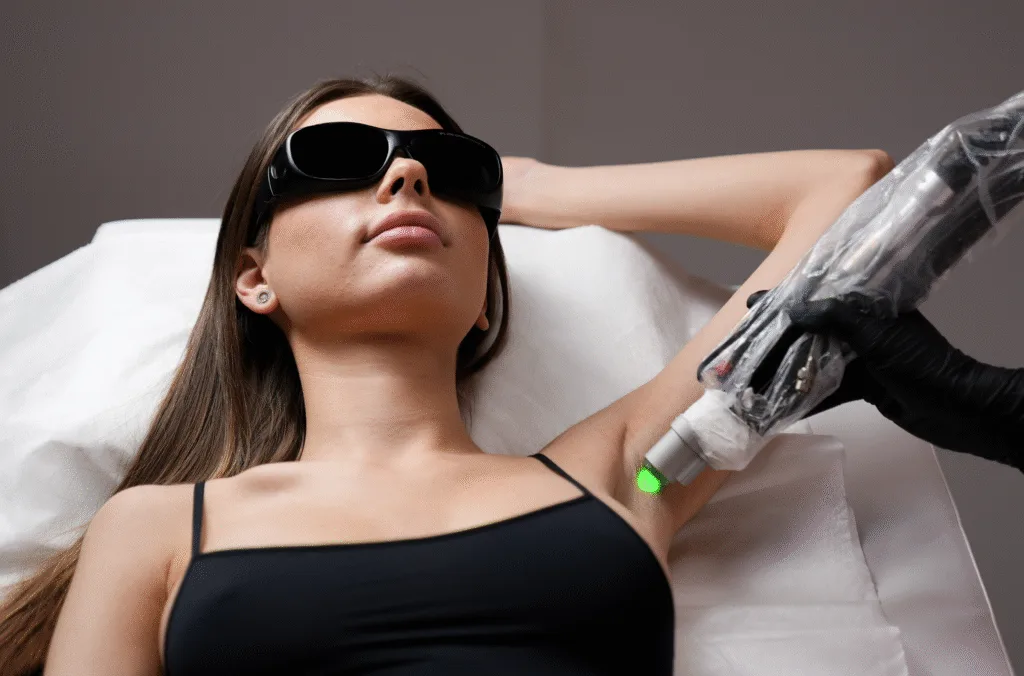
1. Sunbathing after laser hair removal
One of the most important mistakes is exposing freshly treated skin to intense UV radiation.
After the procedure, the skin may temporarily become more sensitive. Sun exposure can increase the risk of:
- irritation,
- redness,
- pigmentation,
- unwanted post-treatment reactions.
This applies both to natural sunlight and tanning beds.
However, there is no single universal period during which everyone should avoid sun exposure. Skin phototype, the type of laser used, the treatment area, and the individual skin reaction all matter. For this reason, you should follow the aftercare instructions provided by your specialist.
2. Not using SPF protection
Avoiding the beach is not enough. UV radiation reaches the skin during walks, car rides, and everyday activities in the city as well.
If the treated area is exposed, especially the face, arms, or legs, proper sun protection is important.
In practice, SPF 50 or SPF 50+ is often recommended, especially during strong sun exposure.
Sun protection should also be reapplied regularly according to the instructions of the product being used.
3. Pulling out hair between treatments
This is one of the mistakes that can directly affect the effectiveness of future sessions.
Between treatments, you should avoid hair removal methods that pull the hair out from the follicle, including:
- waxing,
- sugaring,
- tweezing,
- mechanical epilators.
Why?
Laser targets melanin in the hair and uses it as a target for light energy. If the hair is removed together with the root before the next session, effective treatment of that follicle may become more difficult.
If visible hair appears between appointments, it can usually be shaved with a razor, according to your specialist’s recommendations.
4. Exfoliating the next day
After laser hair removal, it is better not to perform mechanical exfoliation or use strong exfoliating products immediately.
The skin may temporarily be:
- red,
- warm,
- more sensitive,
- slightly swollen around the hair follicles.
Additional friction may worsen irritation.
It is best to wait until the skin has fully calmed down before exfoliating and to follow the recommendations of the specialist who performed the treatment.
5. Going to the swimming pool immediately after treatment
Visiting a swimming pool immediately after laser hair removal is also not recommended.
Freshly irritated skin may tolerate the following less well:
- chlorinated water,
- prolonged soaking,
- contact with disinfecting chemicals.
Extra caution is especially important after treating the bikini area, underarms, and other sensitive zones.
The safest option is to return to the pool only after the skin has calmed down, in line with your individual aftercare instructions.
6. Sauna
A sauna means high temperature, intense sweating, and dilation of blood vessels.
These are exactly the factors that are better avoided immediately after laser hair removal.
A sauna may intensify:
- redness,
- burning,
- a sensation of heat,
- skin discomfort.
The same principle applies to steam rooms and other treatments that strongly heat the body.
7. Intense gym workouts
Can you exercise after laser hair removal?
Light physical activity is not always a problem, but an intense workout immediately after treatment may irritate the skin.
The main reasons are:
- increased body temperature,
- heavy sweating,
- friction from clothing,
- sweat coming into contact with freshly treated skin.
This is particularly important after hair removal on the underarms, bikini area, thighs, or back.
If the skin is still red or sensitive, it is better to postpone an intense workout.
8. Hot bath or very hot shower
Another common mistake is taking a long hot bath immediately after treatment.
After laser hair removal, the skin does not need additional heating. A gentle shower at a comfortable, moderate temperature is a much better choice.
Until the skin has fully calmed down, it is also advisable to limit:
- hot tubs,
- hot baths,
- prolonged exposure to very warm water.
9. Skincare products containing alcohol or other irritating ingredients
After treatment, some people feel tempted to disinfect the skin with an alcohol-based product. In most cases, this is unnecessary and may increase burning and dryness.
Immediately after treatment, you should also be cautious with:
- fragranced cosmetics,
- harsh deodorants,
- strong acne treatments,
- exfoliating products.
Skincare should be as simple and gentle as possible.
10. Returning to retinol and retinoids too quickly
Retinol and other retinoids can increase skin sensitivity and exfoliation.
This is particularly important when treating:
- the face,
- the upper lip,
- the chin,
- the neck.
You should not automatically return to active skincare the day after treatment. The timing of reintroducing a product should depend on its type, concentration, the condition of your skin, and your specialist’s recommendations.
If you use prescription retinoids, make sure to inform the practitioner during your consultation.
11. Using acids immediately after treatment
The same principle applies to cosmetic acids.
Products containing, among others:
- AHA,
- BHA,
- glycolic acid,
- salicylic acid,
- lactic acid,
may further irritate the skin after laser treatment.
Extra caution is needed when combining laser hair removal with intensive chemical peels.
It is best to return to active ingredients only after the skin has fully calmed down and in accordance with your specialist’s advice.
12. Not following the correct intervals between sessions
The final mistake is less obvious, but it can significantly affect the effectiveness of the entire treatment course.
Laser hair removal is not performed daily or weekly. The laser works most effectively on hairs that are in the appropriate phase of the growth cycle.
For this reason, follow-up sessions are scheduled at specific intervals, which may vary depending on:
- the treatment area,
- the speed of hair growth,
- the stage of the treatment course,
- the response to previous sessions.
Having treatments too frequently does not automatically produce faster results. At the same time, very long and irregular gaps can make it harder to maintain a consistent treatment plan.
The schedule should be determined by a specialist based on the response of the skin and hair.
What should you do after laser hair removal?
Aftercare should be gentle above all. The skin needs time to calm down, so instead of using many skincare products, it is better to focus on protection and reducing irritating factors.
It is advisable to:
- use gentle skincare,
- protect the skin from UV radiation,
- use a high SPF on exposed areas,
- avoid excessive heating of the skin,
- avoid scratching or rubbing the treated area,
- use a razor between sessions instead of methods that pull hair out from the root,
- monitor how the skin reacts,
- follow your specialist’s individual recommendations.
How long does the skin take to recover after laser treatment?
The response is individual. In some people, redness disappears quite quickly, while in others, a mild perifollicular reaction may last longer.
Factors that can influence recovery include:
- skin sensitivity,
- the treatment area,
- hair thickness and density,
- the technology used,
- the device settings.
If you develop increasing pain, blisters, unusual pigmentation, or any other concerning reaction, contact the clinic or salon where the treatment was performed and, if necessary, consult a doctor.
FAQ – what should you avoid after laser hair removal?
Can you shave after laser hair removal?
Yes. Between sessions, you can use a razor once the skin has calmed down. However, you should not remove hair with wax, tweezers, sugaring paste, or a mechanical epilator.
Can you go swimming after laser hair removal?
Immediately after treatment, it is better to wait until the skin has calmed down. Chlorinated water may further irritate the freshly treated area.
Can you exercise after laser hair removal?
Intense exercise immediately after treatment may cause additional irritation due to sweat, heat, and friction. Returning to workouts should depend on how your skin reacts and on your specialist’s recommendations.
Can you use a sauna after laser hair removal?
A sauna is not recommended immediately after treatment. High temperatures can intensify redness and a burning sensation.
Can you use retinol after laser hair removal?
You should not automatically restart retinol the next day. The skin should be fully calm first, and the timing of reintroducing active products is best discussed with your specialist.
Can you sunbathe after laser hair removal?
Intense UV exposure should be avoided according to your aftercare recommendations. Exposed skin should be properly protected from the sun.
